
Should I invest in organic marketing or just pay for ads?” And honestly? Every time someone asks me this, I want to say “both” and “it depends” in the same breath.
But I get it. You’ve got a limited budget, limited time, and you need to make smart decisions about where to invest your marketing dollars. That’s exactly why the debate around Organic vs Paid Marketing matters so much. So let’s have an honest conversation about what these strategies really are, what they can do for you, and how to figure out which one (or what mix) makes sense for your business.
What We’re Really Talking About.
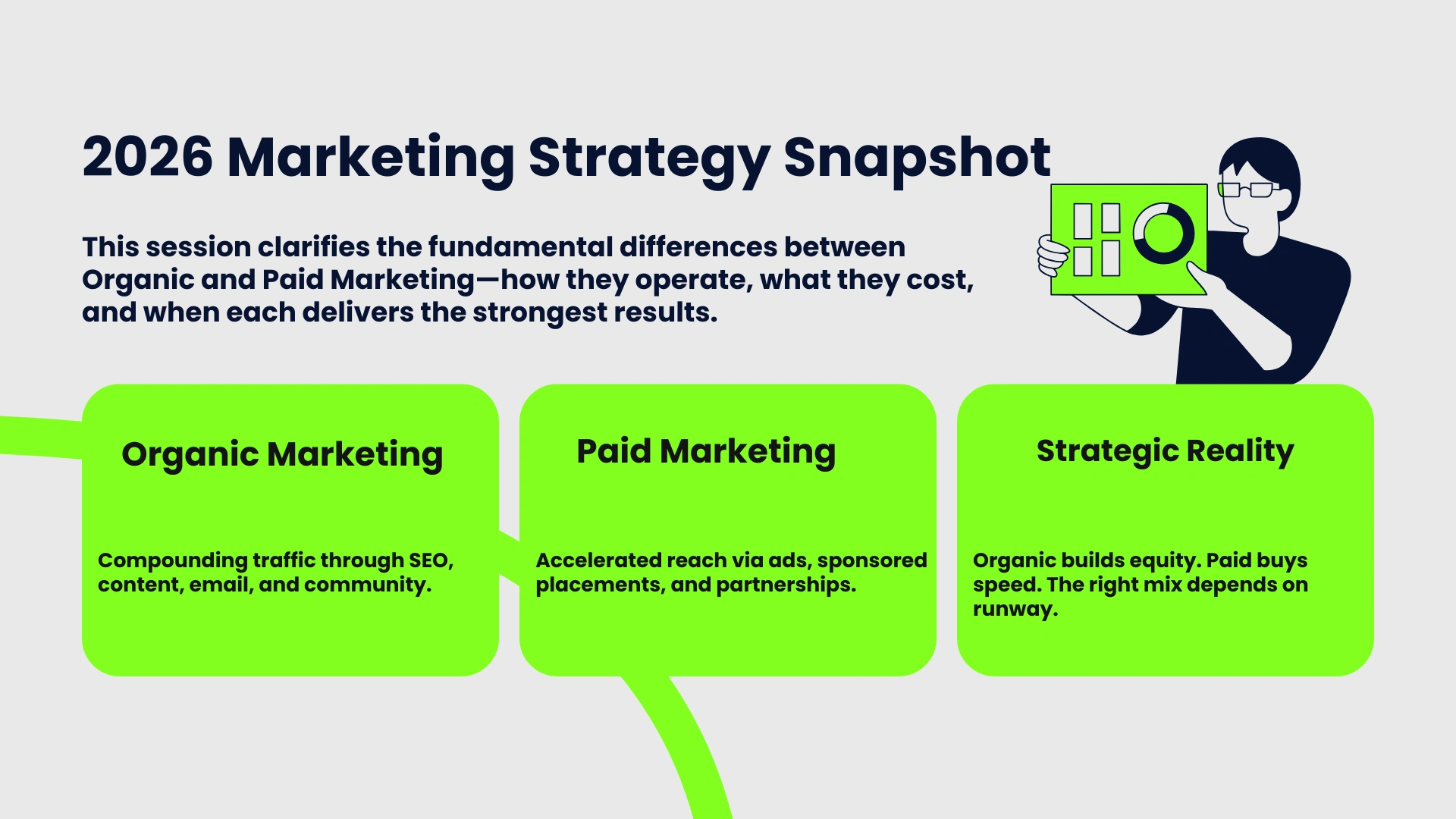
Before we dive deep, let’s make sure we’re on the same page about what these marketing approaches actually mean.
Organic marketing is any effort to attract customers naturally without directly paying for placement. Think SEO, social media posts, content marketing, email newsletters to your existing list, word-of-mouth, and community building. You’re investing time and creativity rather than ad dollars.
Paid marketing is pretty straightforward—you’re paying for visibility. Google Ads, Facebook ads, Instagram sponsored posts, LinkedIn campaigns, display advertising, influencer partnerships. Money goes in, visibility comes out.
The debate has been going on forever, and here’s why: they work in fundamentally different ways, on different timelines, with different strengths and weaknesses.
The Honest Truth About Organic Marketing.
Let me start with organic marketing because I think it gets romanticized a bit too much. People talk about it like it’s “free marketing,” and that drives me nuts because it’s absolutely not free.
Organic marketing costs time, skill, consistency, and often indirect costs like tools and content creation. That blog post didn’t write itself. Those social media graphics required design work. That SEO strategy needs expertise and ongoing optimization.
But here’s what organic marketing does beautifully: it builds assets that compound over time.
That blog post you wrote six months ago? Still bringing in traffic. Those social media followers you’ve been cultivating? They’re an audience you own. That email list you’ve been growing? Worth its weight in gold.
When comparing the two approaches, organic is the tortoise in the race. Slow, steady, and if you stick with it, incredibly powerful in the long run.
I’ve seen businesses completely transform their trajectory through organic marketing. A friend runs a B2B software company that spent three years publishing helpful content, building their email list, and optimizing for search. Year one? Crickets. Year two? Some traction. Year three? They were getting more qualified leads than they could handle, all without spending a dollar on ads.
But—and this is important—they had the runway to wait. They had other revenue sources. They could play the long game.
The Reality of Paid Marketing.
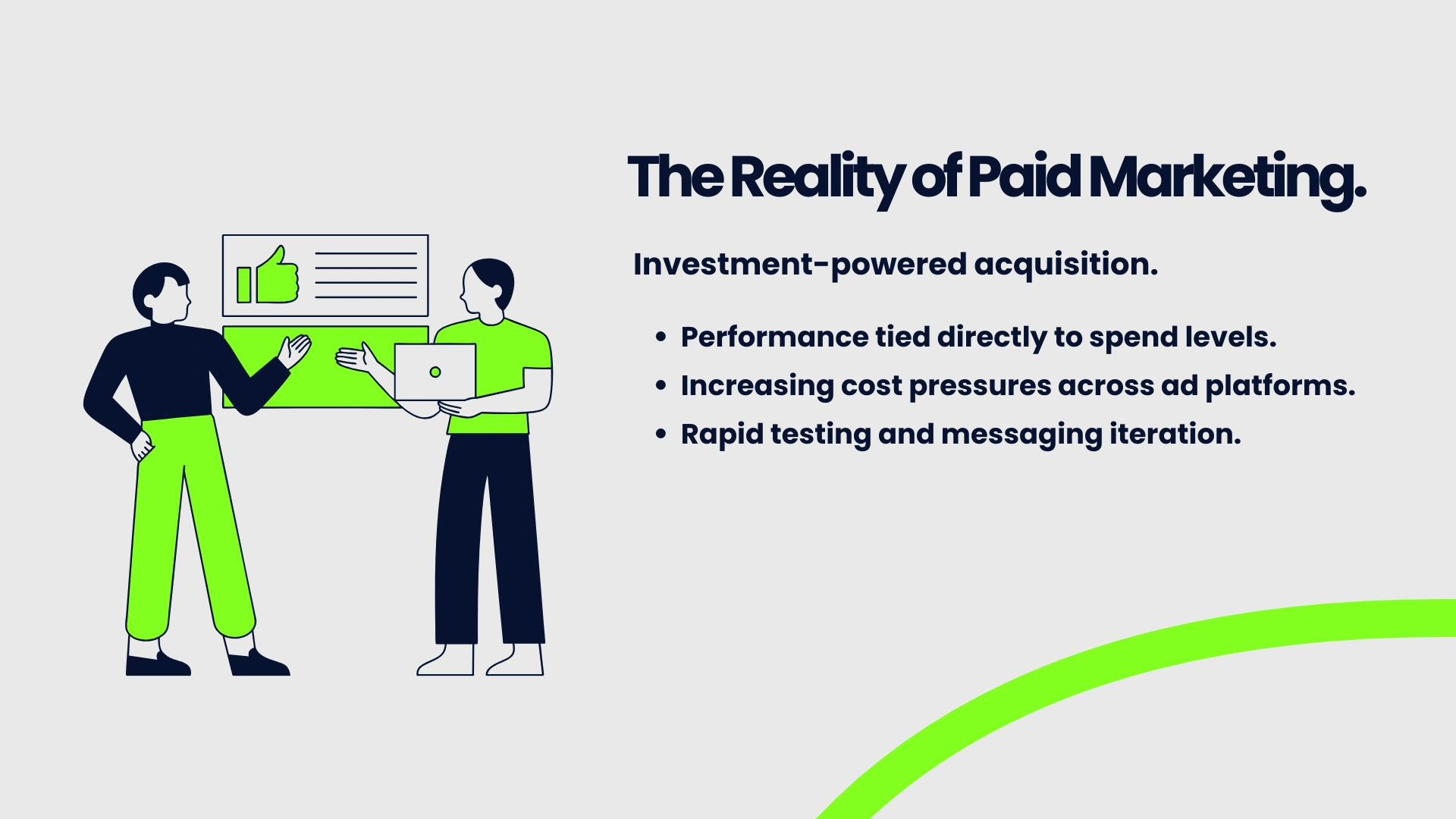
Now let’s talk about paid marketing, which gets unfairly dismissed by the “organic purists” out there.
Paid marketing is immediate. You turn on a campaign, and you start getting results. Not guaranteed good results, mind you, but results. Traffic, impressions, clicks, conversions—they start happening right away.
When evaluating your options, paid is the hare. Fast, powerful, but only as long as you keep feeding it.
I worked with a startup that needed to validate their product-market fit quickly. They couldn’t wait two years for organic traffic to build. They ran targeted Facebook and Google ads, got data fast, iterated on their messaging, figured out their ideal customer, and scaled. For them, paid marketing was absolutely the right move.
The challenge with paid marketing? The results cease as soon as you stop making payments. That Facebook ad that was crushing it yesterday? Gone today if you pause the campaign. Plus, ad costs keep rising. What cost $1 per click two years ago might cost $3 today.
But here’s what paid marketing does brilliantly: it gives you control and speed. Need to move inventory? Run a sale campaign. Launching something new? Get it in front of your target audience tomorrow. Testing a new market? Spend $500 and see what happens.
The Money Talk – What Actually Costs What.
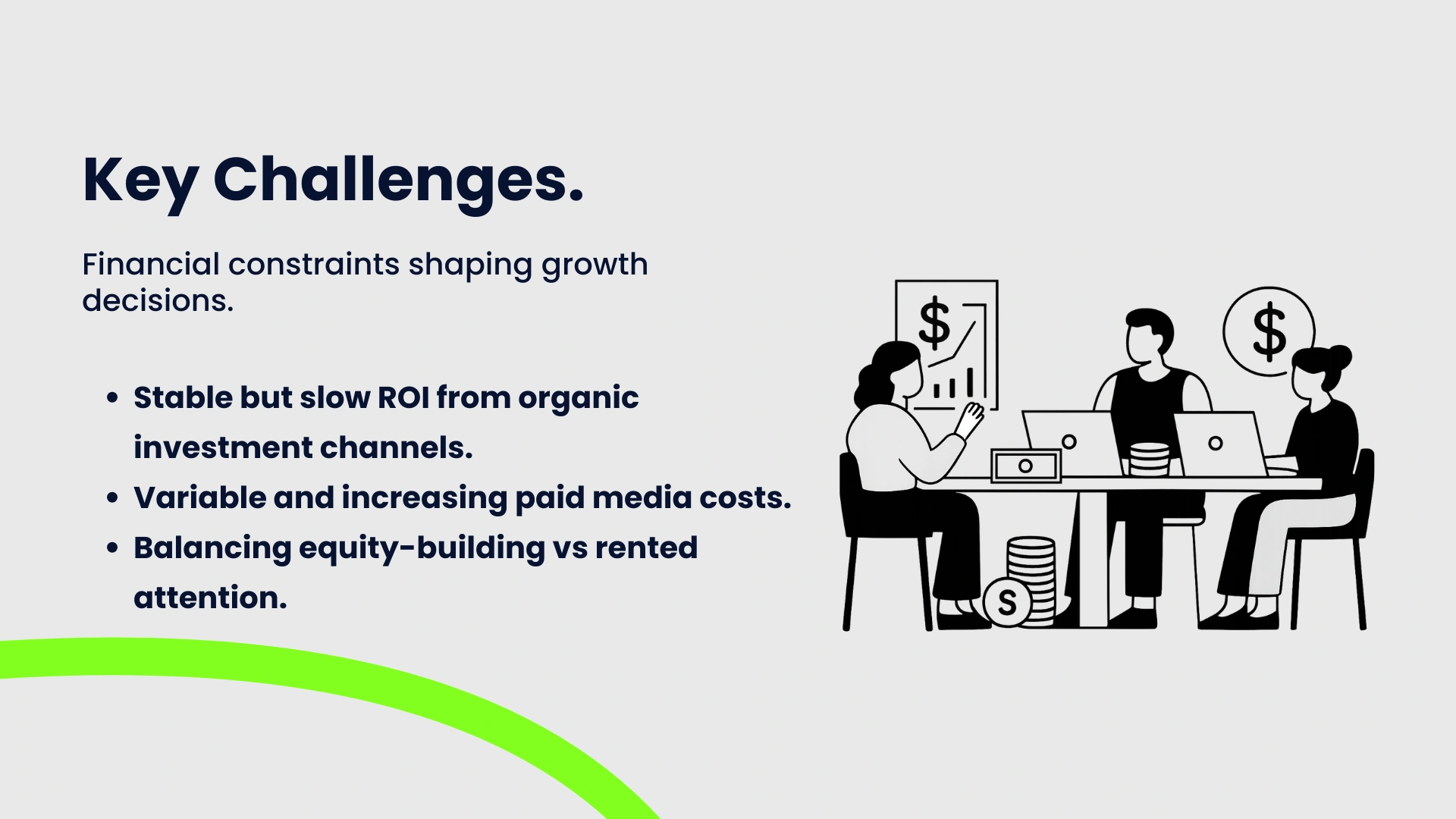
Let’s get real about budget because this is often what the decision comes down to.
Organic marketing costs:
- Your time (or your team’s time)
- Content creation tools and software
- SEO tools and platforms
- Maybe a content creator or designer
- Marketing automation software
- Website hosting and maintenance
If you’re doing it yourself, you might spend $100-500/month on tools but invest 20-40 hours a week. If you’re hiring, you’re looking at anywhere from $2,000 to $10,000+ monthly for quality content creation and strategy.
Paid marketing costs:
- Ad spend (this is the big one)
- Creative production (videos, images, copy)
- Testing budget
- Maybe an ads manager or agency
Small businesses might start with $500-1,000/month in ad spend. Growing companies often invest $5,000-50,000+. And that’s just the media buy—not counting the cost to create the ads or manage the campaigns.
The key difference from a budget perspective? Organic costs are relatively stable and build equity. Paid costs are variable, and you’re renting attention.
Speed vs. Sustainability. The Core Trade-off.
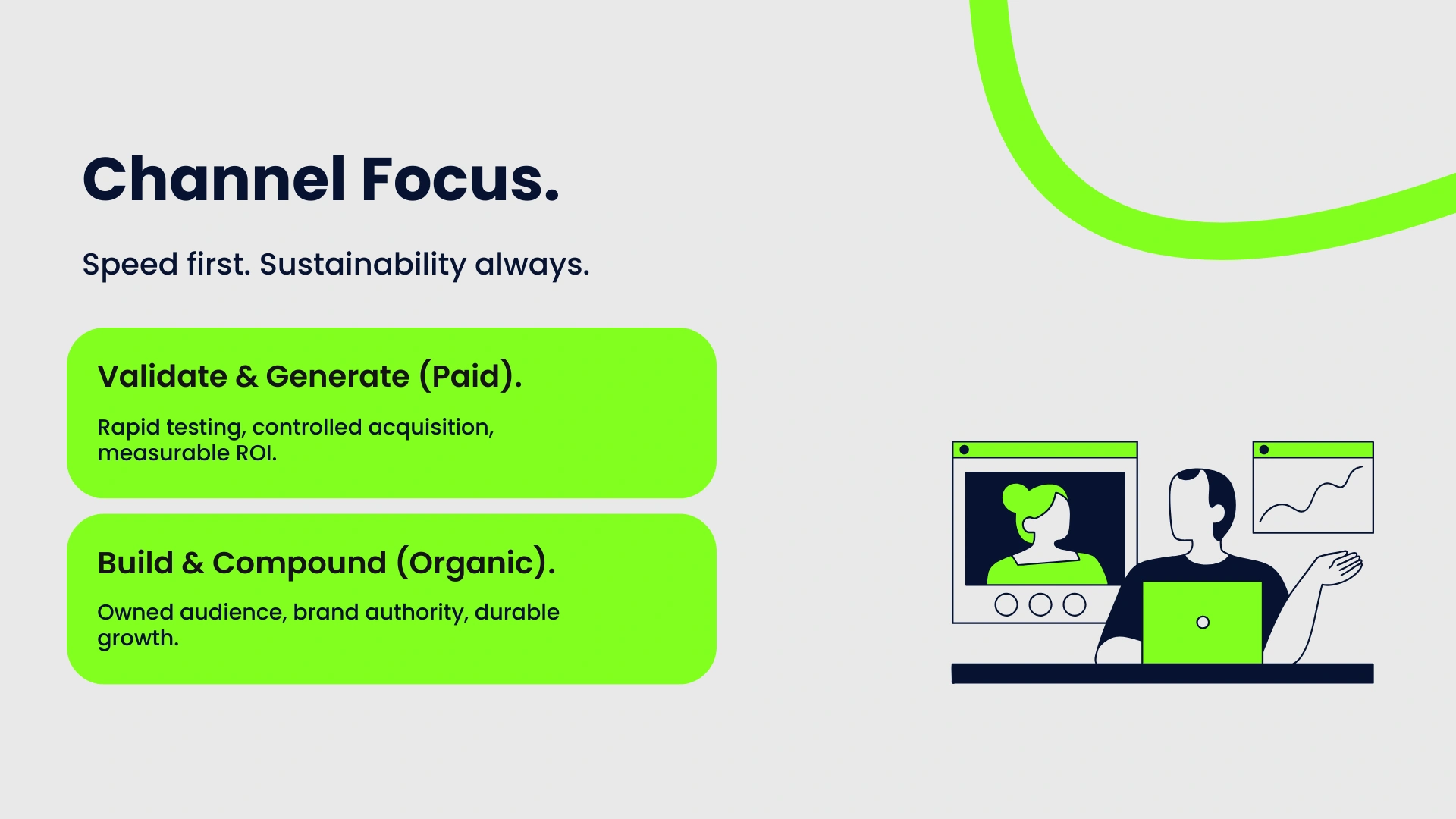
Here’s the central tension in the organic vs paid marketing debate: speed versus sustainability.
Need results this month? Paid marketing is your friend. Building for the next three years? Organic marketing is probably your better bet.
I’ve noticed that successful businesses don’t actually choose between organic vs paid marketing—they sequence them strategically.
One common pattern: Start with a small paid budget to validate your message and audience while simultaneously building organic channels. As organic channels mature and start driving results, you can scale back paid spending or use paid to amplify your best organic content.
Another approach: Use paid marketing to generate quick wins and cash flow, then reinvest some of those profits into organic marketing for long-term stability.
When Organic Marketing Makes the Most Sense.
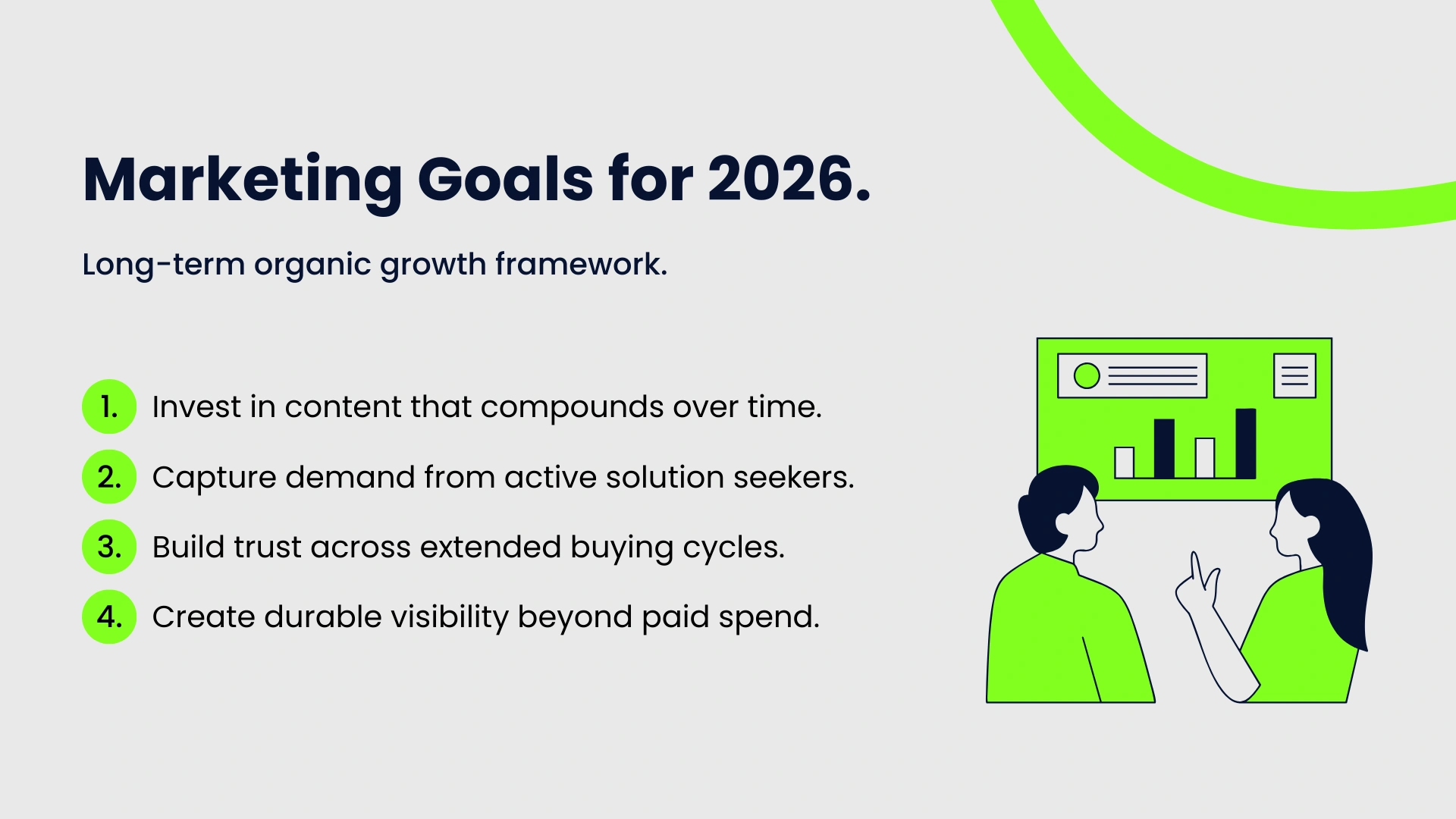
Organic marketing tends to work best when:
You’re in it for the long haul and can wait 6-18 months for significant results. Your service or product has a lengthy sales history cycle anyway. You have expertise or stories worth sharing. Your target audience actively looks for answers similar to yours. You’re building a brand, not just making quick sales. You have more time than money.
In the organic vs paid marketing equation, organic wins when you’re playing an infinite game. You’re building something that lasts.
I’ve seen organic marketing absolutely crush it for:
- B2B companies with complex products
- Service providers building authority
- Niche e-commerce brands building communities
- Local businesses dominating local search
- Content creators building audiences
When Paid Marketing Makes the Most Sense.
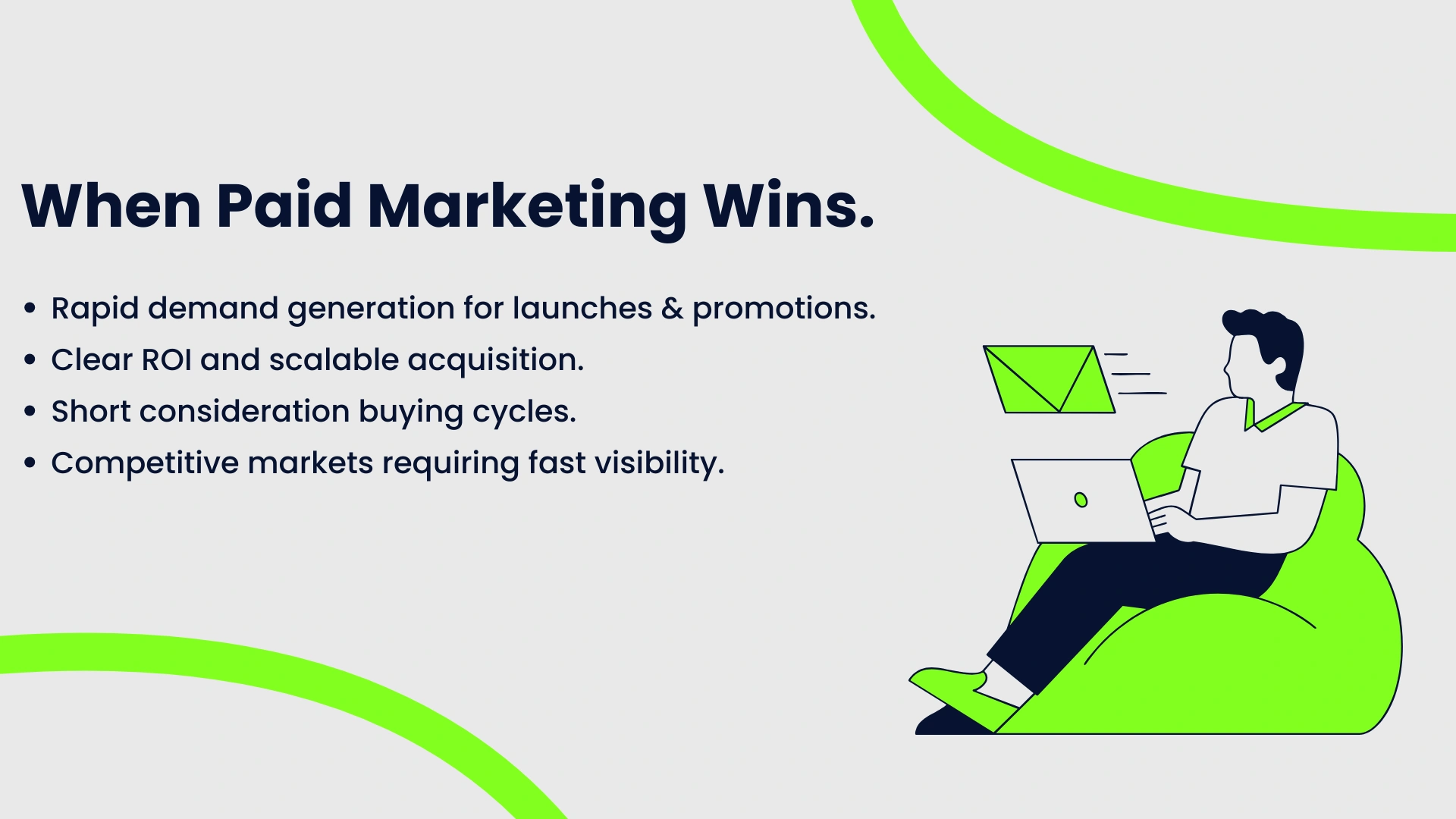
Paid marketing tends to work best when:
You need results quickly (launching, testing, or running promotions). You have a clear ROI on your ad spend. Your product is impulse-friendly or has a short consideration period. You’re entering a competitive market and need visibility fast. You have budget but limited time. You’ve already validated that your messaging works.
In the organic vs paid marketing comparison, paid wins when you need speed and have budget. You’re sprinting, not marathon training.
I’ve seen paid marketing deliver incredible results for:
- E-commerce brands with proven products
- SaaS companies with clear value propositions
- Event promotions and limited-time offers
- Retail and restaurants driving foot traffic
- Apps and digital products with quick conversion cycles
The Best of Both Worlds: Integrated Strategy.
Here’s what I’ve learned after watching hundreds of businesses navigate the organic vs paid marketing decision: the best results come from integration, not choosing sides.
Use paid marketing to amplify your best organic content. Use organic marketing to nurture the audiences you attract through paid ads. Use paid to test messages quickly, then invest in organic around what works. Use organic to build trust, and paid to expand reach.
A small business I advise does this beautifully. They publish helpful blog content (organic) and promote their best posts with a small Facebook ad budget (paid). People who engage get added to a remarketing audience and see more organic content. Some join their email list (organic asset). They occasionally run paid campaigns to their email list for promotions.
See how organic vs paid marketing becomes less about versus and more about and?
Measuring Success: Different Metrics Matter.
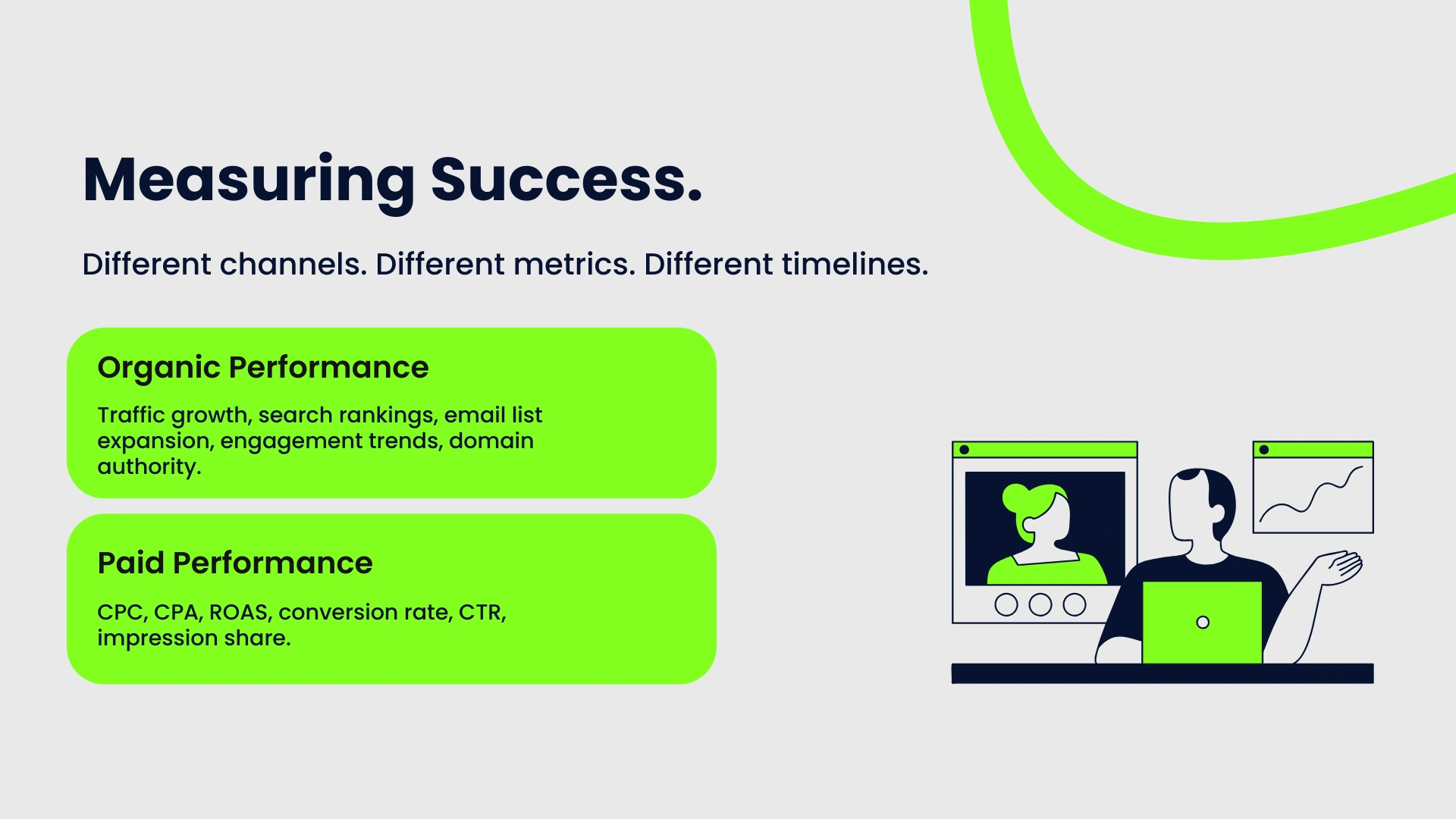
When comparing organic vs paid marketing results, you need to measure them differently because they achieve different things.
Organic marketing metrics:
- Organic traffic growth over time
- Search engine rankings
- Email list growth
- Engagement rates
- Share of voice
- Domain authority
- Time on site and pages per session
These are slow-burn metrics. You’re looking for trends over months, not days.
Paid marketing metrics:
- Cost per click (CPC)
- Cost per acquisition (CPA)
- Return on ad spend (ROAS)
- Conversion rate
- Click-through rate (CTR)
- Impression share
These are immediate and directly tied to dollars spent.
The mistake I see people make with organic vs paid marketing measurement is comparing them on the same timeline. Organic marketing in month one looks terrible compared to paid. Organic marketing in month 18 often looks phenomenal compared to the accumulated cost of paid.
Common Mistakes to Avoid.
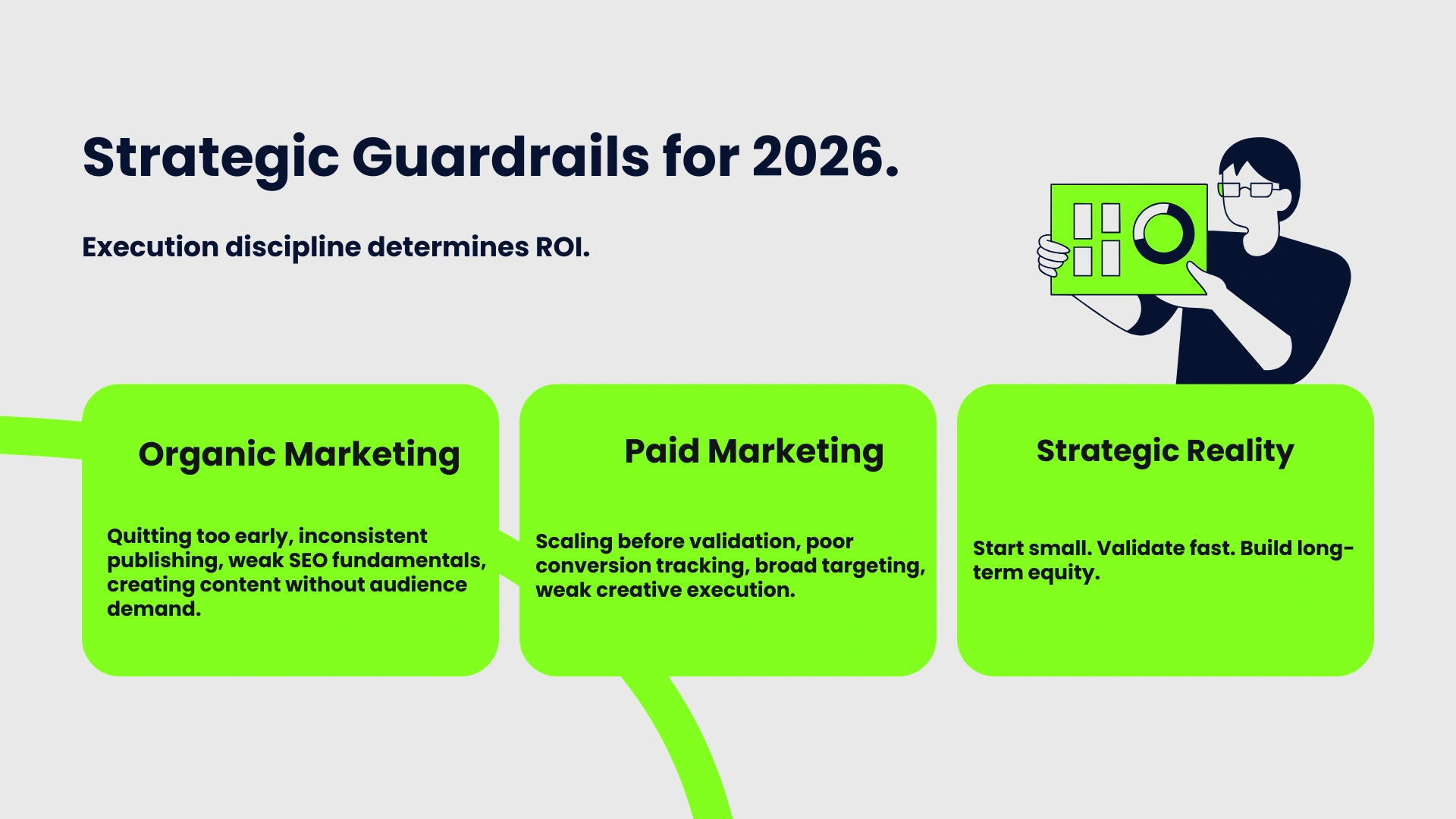
After years of watching businesses navigate organic vs paid marketing, here are the mistakes I see most often:
With organic marketing:
- Giving up too soon (quitting after three months)
- Publishing inconsistently
- Creating content you want to make instead of what your audience needs
- Ignoring SEO basics
- Not promoting your organic content at all
With paid marketing:
- Spending money before validating your offer
- Not tracking conversions properly
- Setting and forgetting campaigns
- Targeting too broadly
- Ignoring creative quality
With both:
- Trying to do everything at once
- Not having clear goals
- Comparing yourself to companies with 10x your budget
- Following tactics without strategy
My Honest Recommendation.
If you’re a brand new business with a limited budget? Start with organic marketing, but use a tiny paid budget ($10-20/day) to test messages and learn faster.
If you’re an established business with a budget but no organic presence? Start building organic now while using paid to maintain results. Future you will thank you.
If you’re somewhere in between? The answer to organic vs paid marketing is probably “both, strategically sequenced.”
The real question isn’t organic vs paid marketing—it’s what ratio makes sense for your business right now, given your timeline, budget, and goals.
Getting Started: Your Next Steps.
Instead of getting paralyzed by the organic vs paid marketing decision, here’s what I suggest:
Start with your goals and understand the organic vs paid marketing trade-offs. Need revenue this quarter? Lean paid. Building for next year? Invest in organic.
Audit your current situation. What’s already working? What channels do you own versus rent?
Choose two things to focus on. Maybe one organic channel (like content + SEO) and one paid channel (like Google Ads). Do them well rather than doing six things poorly.
Set a timeline to evaluate. Give organic strategies at least six months. Review paid campaigns weekly.
Track everything. You can’t improve what you don’t measure.
Be patient with organic, ruthless with paid. Organic marketing deserves time to work. Paid marketing should prove itself quickly. Ultimately, the key to success lies in finding the right balance in your organic vs paid marketing strategy that aligns with your business goals and available resources.
The Bottom Line on Organic vs Paid Marketing.
Look, I get why the organic vs paid marketing debate exists. They feel like opposites. One feels “pure” and relationship-based. The other feels transactional.
But in reality, both have their place. Both can work beautifully. And both work even better together.
The businesses I see crushing it aren’t the ones who picked a side in the organic vs paid marketing battle. They’re the ones who understood that marketing is about reaching the right people with the right message at the right time—and sometimes that means organic, sometimes that means paid, and often that means both.
Your job isn’t to choose between organic vs paid marketing based on ideology. It’s to choose based on what makes sense for your business, your budget, your timeline, and your goals.
So stop agonizing over organic vs paid marketing like it’s a binary choice. Start thinking about how each can serve your business strategy. Measure everything, start small, then work your way up.
The answer to organic vs paid marketing? It’s probably “yes.”
Now go make something happen.
Author – Saneeb